If there’s one thing we’ve learnt over the years at Edge Early Learning, it’s that a child’s artwork doesn’t always tell the whole story. By the time a painting comes home to you in their backpack, so much has already happened.
Maybe they’ve spent ten minutes experimenting with colours because they were curious about what would happen if they mixed them together. Perhaps they’re sitting beside another child, comparing their creations and sharing ideas. These are the moments that are easy to miss, but often the ones that tell us the most.
How Visual Arts Support Learning and Development in Early Childhood
According to Early Childhood Australia, giving children opportunities to explore creative arts supports their creativity, sense of identity and broader learning and development.
At our early learning centres, visual arts are about much more than paint, paper and bringing out the creativity in your child. They provide opportunities for them to explore ideas, communicate thinking, solve problems, build confidence and illustrate the world around them.
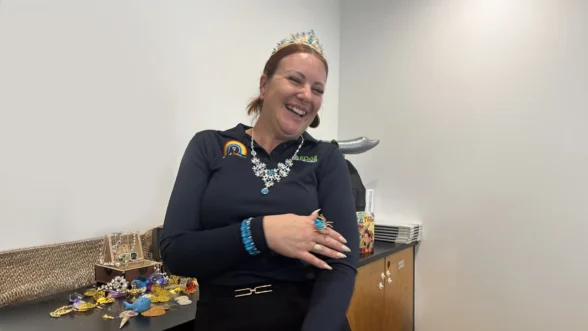
A piece of art might look simple to parents, but to the child who created it, there’s a whole story about it. Maybe it represents something they saw on the weekend, a memory from home, or an idea. Centre Director, Shira, explains this beautifully:
“Every drawing, painting, sculpture, or creative piece represents a child’s thinking, imagination, effort, and learning journey. Even when an artwork appears simple to an adult, it can hold great meaning for the child who created it.”
This concept shapes how we approach visual arts here at Edge Early Learning. Artwork isn’t something that needs to be finished quickly, so we can move on to the next task. It’s an opportunity for your children to explore and express themselves.
How Visual Arts Support Communication and Language Development
Visual arts in early learning can become a powerful way for children to express themselves. While some children are naturally chatty, others need a little more time to find the words. For children who are still developing their language or learning English as an additional language, art can become another way to share their thoughts and feelings.
Our educators notice that children who are often quiet in group settings may suddenly open up while painting, drawing or working with clay. Shira says, “Art gives children the opportunity to share their ideas, emotions, and experiences without feeling limited by words.”
If children are dealing with big feelings or emotions, it’s especially important. Shira remembers supporting a little girl who was navigating the loss of her mother, and how visual arts gave her a safe way to express emotions that were too difficult to explain out loud. Visual arts aren’t only about creativity, it’s also about being understood.
Why Open-Ended Visual Arts Support Child Development
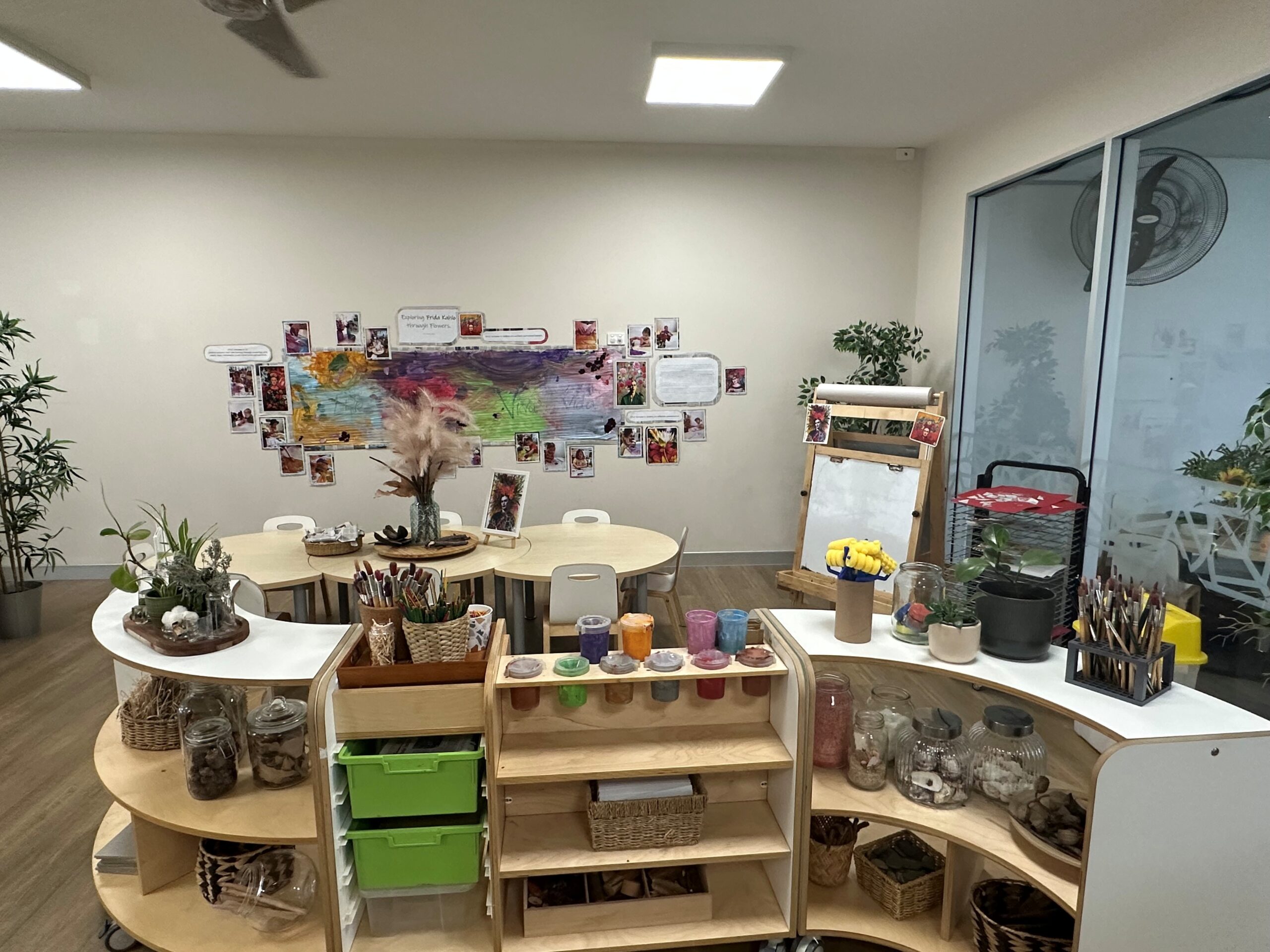
At Edge, our educators are supported to create open-ended visual arts experiences rather than relying on craft templates. Our Program and Practice Team explains that this helps shift thinking away from product-driven art and towards “the process of creating art through child-led exploration.”
This process matters because it gives children ownership. They’re not trying to copy an adult’s example. They are making decisions, testing out their ideas and learning to trust their own thinking. To an adult, an artwork might just look like a mess. To our educators, it’s a child figuring things out and taking on a challenge.
We’ve learnt not to worry too much about whether a painting looks perfect when it’s complete. What interests us more is the child who keeps persevering when something gets tricky, experiments with a different approach, or proudly says, “Look, I worked it out.” Those are the moments that tell us real learning is happening.
Why We Display Children’s Artwork
We believe children’s artwork continues to tell a story long after the paint has dried. At Edge Early Learning, we display children’s creations to give them the opportunity to:
- Revisit their ideas and continue learning.
- Share the story behind their artwork with educators, friends and family.
- Build confidence by seeing their work valued and celebrated.
- Make new connections between past experiences and new learning.
- Feel proud knowing their ideas and creativity matter.
As Shira describes it, children’s artwork becomes “a living part of the curriculum,” encouraging ongoing conversations, deeper thinking and continued exploration.
Visual Arts in Early Learning: From Nursery to Kindy and Preschool
Visual arts look different in each of our age group rooms, depending on their needs, interests and abilities.
In the nursery room, babies might explore safe textures and colours, as they begin discovering the world through their senses.
For little ones in our toddlers room, visual arts often become more experimental. They start exploring tools and materials, building confidence as they make choices and begin expressing ideas in early ways.
In Pre-Kindy, children may start combining materials, exploring techniques and creating with a little more intention, while still being free to follow their curiosity.
By Kindy, visual arts can become part of a much deeper inquiry. Children may plan, revisit their work, represent ideas and use art as a way to communicate thinking.
Across every age group, our educators keep their focus the same. It is not about creating perfect artwork, it’s about giving children space to explore their ideas.
How You Can Understand Your Child’s Learning in Visual Arts
The next time your child brings home a painting, drawing or sculpture, why not ask about the story behind it rather than what it is meant to be? You could ask what they were thinking about while they made it or what part they enjoyed most. Their answers might surprise you!
You might hear about a friend who helped them, their new favourite colour or a problem they solved. These little conversations can give a glimpse into the learning that happened during their day in early learning.
Visual Arts at Edge Early Learning
At Edge, visual arts are an important part of our early learning program. Children aren’t just creating art, they’re expressing themselves, building confidence, exploring ideas and showing us how they see the world.
We’re continuously growing, and so is our approach to visual arts. We’re committed to creating even more meaningful, inquiry-led experiences where creativity is a part of everyday learning. By continuing to support our educators, we can help children feel confident to explore, ask questions and share their ideas.
Find your nearest Edge Early Learning Centre and learn how our approach helps children grow into confident and capable learners. Alternatively, book a tour and discover it for yourself.