

Early Childhood Development, Wellbeing
Early Childhood Development
17 January, 2026
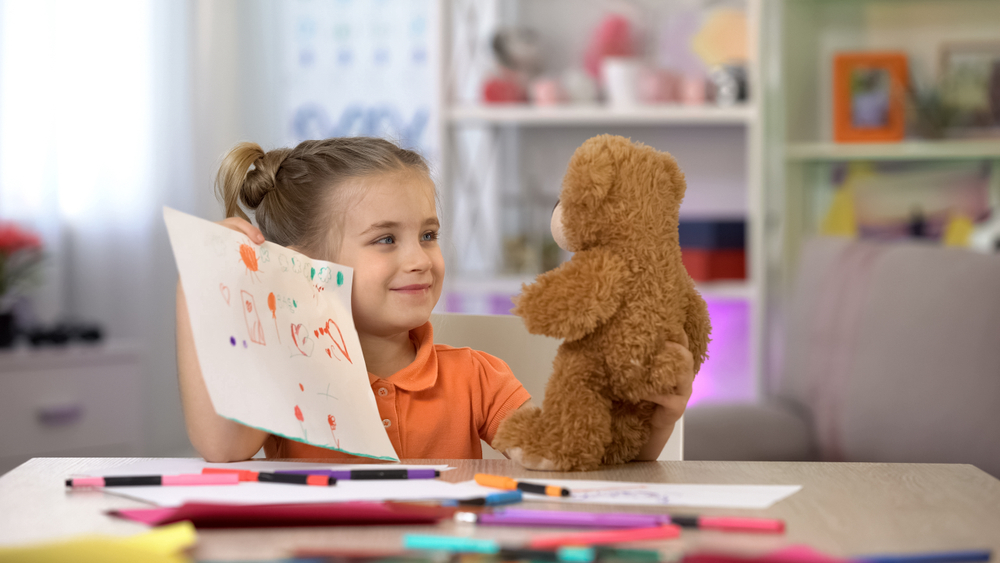
Does your child chatter away to an imaginary friend or insist you set their invisible friend an extra place at the dinner table? Play along. Imaginary friends help children develop a whole range of skills.
Having imaginary friends is a normal part of childhood. Researchers have found it is quite common for children to invent imaginary playmates and there’s usually no need for concern. Those children understand and acknowledge the friend is a creation of their imaginations.
Imaginary friends in childhood can take almost any form because they are, of course, imagined. More often, children imagine another child, but it’s not unusual for imaginary friends to be animals or toys too. They are companions that do whatever the child chooses. They can be a friend providing a source of comfort or support in unfamiliar situations, someone to boss around or simply a playmate to provide company and to help them explore relationships.
Researchers have found that older children, only children and those who don’t watch much television are more likely to invent imaginary playmates. It’s not an unreasonable jump to assume children create imaginary friends because they are lonely or don’t have any real friends, but experts suggest it is more likely children simply have time to exercise their imaginations and create imaginary characters.
Children may invent imaginary friends to:
Imaginary friends typically appear in the toddler and pre-school stage of early development, from as young as two-and-a-half years old. A child may have an invisible friend during a specific time and their friend may disappear or reappear for no reason. Children may have more than one imaginary friend – or even a whole crew of them.
Imaginary friends can become part of your family for several months or even years. It depends on the child.
A child’s interactions with their imaginary friends can reveal insights about the child’s interests, wishes and fears. It can also be incredibly cute! You may like to join in play with their imaginary friend or listen to their conversations and jot down observations in a special notebook of memories to share with your child when they’re older.
Research shows having a pretend or invisible friend can help a child to explore new ideas and develop their imaginations and creativity. It is an opportunity for them to practice problem-solving and social interactions, giving them more confidence in social settings. Chatting to imaginary friends may also help children to regulate their emotions. They can provide support to ease children through tough transitions or new routines.
Learn about the wider benefits of imaginative play.
Take your child’s lead and play along with their imaginary friends. Including them in games or setting an extra place at the dinner table is completely fine. However, it is important to set limits and boundaries as you would with other real-life friendships. Your child’s imaginary friends should be held to the same standards for behaviour and language as your child and their siblings or peers.
While imaginary friends are usually not a cause for concern, there are some behaviours that may prompt further consideration. If parents are concerned, you should seek support from your General Practitioner or other health professional. Particularly, if a child displays the following behaviours:
At Edge Early Learning, we encourage children to explore their imagination and develop their creativity. We’re here to support children and parents through the early developmental years.
With 70 childcare, kindergarten, and preschool centres across Queensland, South Australia, and the ACT our Family Engagement Team can help match you with a local centre that best suits your needs.
Fill out your details, and we’ll be in touch.
Early Childhood Development, Wellbeing
Early Childhood Development, Education